
Archiwa Online DE

Osmikon – portal badawczy Europy Środkowej, Wschodniej i Południowo-Wschodniej
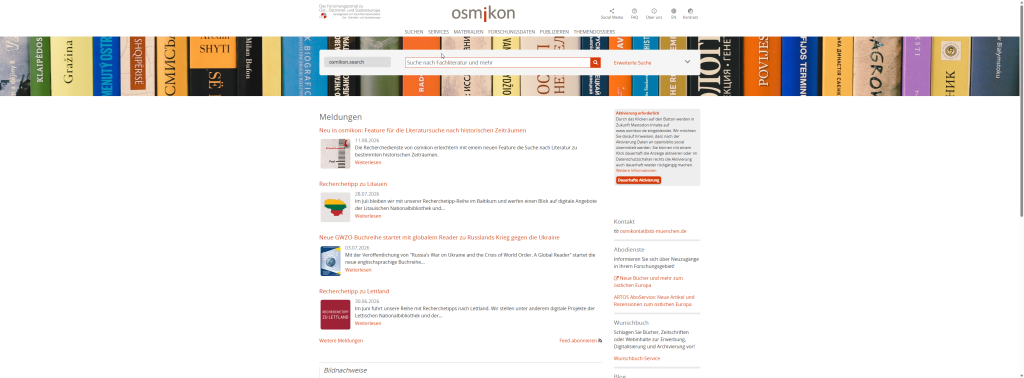
Osmikon to specjalistyczny portal naukowy poświęcony historii, kulturze i społeczeństwom Europy Środkowo-Wschodniej, Wschodniej i Południowo-Wschodniej. Serwis jest prowadzony w ramach Fachinformationsdienst Ost-, Ostmittel- und Südosteuropa i związany z Bayerische Staatsbibliothek w Monachium. Jego zadaniem jest ułatwienie dostępu do literatury, źródeł cyfrowych, baz danych i innych materiałów potrzebnych do prowadzenia badań nad Europą Wschodnią.

Dla osób zajmujących się genealogią Osmikon nie jest typową bazą genealogiczną zawierającą indeksy urodzeń, małżeństw i zgonów. Jego znaczenie polega przede wszystkim na tym, że pozwala docierać do mniej oczywistych źródeł historycznych, publikacji i materiałów archiwalnych dotyczących ludzi oraz miejscowości związanych z Europą Środkową i Wschodnią.

Portal może być szczególnie interesujący dla osób badających rodziny pochodzące z terenów dzisiejszej Polski, Niemiec, Czech, Słowacji, Ukrainy, Białorusi, Litwy, Rosji, Rumunii, Węgier i innych krajów regionu. Ze względu na częste zmiany granic państwowych źródła dotyczące jednej rodziny mogą być obecnie rozproszone pomiędzy instytucjami znajdującymi się w kilku różnych państwach.

Jednym z podstawowych elementów serwisu jest wyszukiwarka osmikonSEARCH. Pozwala ona prowadzić poszukiwania jednocześnie w wielu katalogach, bibliotekach cyfrowych, repozytoriach i specjalistycznych bazach. Z punktu widzenia genealoga warto wyszukiwać przede wszystkim nazwę miejscowości, regionu, parafii, powiatu albo nazwisko związane z badaną rodziną.

Szczególnie wartościowe mogą być materiały zdigitalizowane. Osmikon udostępnia i integruje cyfrowe publikacje oraz źródła dotyczące Europy Wschodniej. Część dokumentów można przeglądać bezpośrednio przez Internet, a przy innych użytkownik otrzymuje informację o bibliotece lub instytucji, w której znajduje się dany materiał.

Interesującą częścią zasobów są tak zwane Ego-Dokumente, czyli dokumenty osobiste. Obejmują one między innymi pamiętniki, dzienniki, autobiografie, listy, wspomnienia, fotografie i dokumenty pochodzące ze spuścizn prywatnych oraz zbiorów instytucjonalnych. Materiały te dotyczą osób związanych z Europą Wschodnią, Środkowo-Wschodnią i Południowo-Wschodnią.

Dla genealogów ta część serwisu może być wyjątkowo interesująca. W zbiorach znajdują się na przykład materiały związane z badaniami historii rodziny Rammelmeyer, w tym autobiografie, wspomnienia, korespondencja i fotografie. Dostępne jest również opracowanie „Genealogy und Chronik” Josefa Kuchinki. Pokazuje to, że w Osmikon można natrafić także na materiały bezpośrednio związane z historią konkretnych rodzin.

Wśród dokumentów występują także polskie materiały osobowe. Przykładem jest spuścizna Tadeusza Otrębskiego, obejmująca życiorys sporządzony w związku z odznaczeniem Krzyżem Walecznych, wiadomość wysłaną z niewoli do matki, zapiski dotyczące ucieczki z obozu karnego oraz dokument Polskich Sił Zbrojnych. W zbiorze występuje także świadectwo chrztu i urodzenia oraz inne dokumenty biograficzne.

Takie dokumenty mogą być znacznie bardziej szczegółowe niż standardowa metryka. Pamiętnik, korespondencja czy życiorys mogą zawierać informacje o rodzicach i rodzeństwie, miejscach zamieszkania, edukacji, służbie wojskowej, migracji, pracy oraz wydarzeniach, w których uczestniczyła dana osoba.

Osmikon udostępnia również przewodniki po archiwach poszczególnych krajów Europy Wschodniej. Są one szczególnie przydatne przy planowaniu bardziej zaawansowanych poszukiwań genealogicznych. Przykładowo przewodnik dotyczący Ukrainy opisuje zasoby poszczególnych archiwów i występujące w nich bazy danych. W przypadku Państwowego Archiwum Obwodu Żytomierskiego wskazane zostały m.in. indeksy ksiąg kościelnych, materiały genealogiczne, wykazy dotyczące ludności żydowskiej oraz baza akt urodzeń, małżeństw i zgonów osób przybyłych z innych parafii.

Jest to istotne dla osób poszukujących przodków na dawnych Kresach. Nawet jeśli Osmikon nie posiada interesującej nas księgi metrykalnej, może wskazać archiwum, bazę albo publikację, w której należy kontynuować poszukiwania.

Portal warto wykorzystywać również do badań nad historią miejscowości. Po wpisaniu historycznej nazwy miasta lub wsi można odnaleźć książki, artykuły, źródła cyfrowe, wspomnienia i inne publikacje związane z danym miejscem. W genealogii może to pomóc w poznaniu parafii, administracji, struktury ludności oraz wydarzeń wpływających na życie przodków.

Podczas wyszukiwania miejscowości należy uwzględniać różne warianty jej nazwy. W zależności od okresu historycznego ta sama miejscowość mogła występować pod nazwą polską, niemiecką, rosyjską, ukraińską, czeską, węgierską lub rumuńską. Warto więc przeprowadzić kilka osobnych wyszukiwań.

Podobną zasadę można zastosować do nazwisk. W źródłach niemieckich nazwisko polskie mogło być zapisane bez polskich znaków, natomiast w dokumentach rosyjskich lub ukraińskich mogło zostać zapisane cyrylicą, a następnie w różny sposób transliterowane na alfabet łaciński.

Osmikon może być szczególnie przydatny wtedy, gdy podstawowe źródła genealogiczne zostały już sprawdzone. Po odnalezieniu metryk przodków można wykorzystać portal do poszukiwania materiałów pozwalających poznać historię rodziny w szerszym kontekście – pamiętników, korespondencji, publikacji regionalnych, dokumentów osobistych, fotografii oraz informacji o zasobach archiwalnych.

Nie należy więc traktować Osmikon jako zamiennika FamilySearch, Geneteki czy baz archiwów państwowych. Jest to raczej rozbudowany portal badawczy, który może wskazać źródła znajdujące się poza standardowymi serwisami genealogicznymi. Jego największa wartość pojawia się podczas badań rodzin, których historia przekraczała współczesne granice państwowe.

Dla genealoga badającego Europę Środkową i Wschodnią Osmikon może być dobrym narzędziem do przejścia od podstawowych danych metrykalnych do bardziej zaawansowanych badań historycznych. Szczególnie warto wyszukiwać w nim miejscowości, historyczne nazwy regionów, nazwiska rodzin oraz materiały dotyczące migracji i osobistych losów mieszkańców.

Dodaj komentarz lub opinię

Twój adres e-mail nie zostanie opublikowany.

We use cookies to personalise content and ads, to provide social media features and to analyse our traffic. We also share information about your use of our site with our social media, advertising and analytics partners.
Cookies settings
Accept
Privacy & Cookie policy
Privacy & Cookies policy
Cookie name Active

Privacy Policy

What information do we collect?

We collect information from you when you register on our site or place an order. When ordering or registering on our site, as appropriate, you may be asked to enter your: name, e-mail address or mailing address.

What do we use your information for?

Any of the information we collect from you may be used in one of the following ways: To personalize your experience (your information helps us to better respond to your individual needs) To improve our website (we continually strive to improve our website offerings based on the information and feedback we receive from you) To improve customer service (your information helps us to more effectively respond to your customer service requests and support needs) To process transactions Your information, whether public or private, will not be sold, exchanged, transferred, or given to any other company for any reason whatsoever, without your consent, other than for the express purpose of delivering the purchased product or service requested. To administer a contest, promotion, survey or other site feature To send periodic emails The email address you provide for order processing, will only be used to send you information and updates pertaining to your order.

How do we protect your information?

We implement a variety of security measures to maintain the safety of your personal information when you place an order or enter, submit, or access your personal information. We offer the use of a secure server. All supplied sensitive/credit information is transmitted via Secure Socket Layer (SSL) technology and then encrypted into our Payment gateway providers database only to be accessible by those authorized with special access rights to such systems, and are required to?keep the information confidential. After a transaction, your private information (credit cards, social security numbers, financials, etc.) will not be kept on file for more than 60 days.

Do we use cookies?

Yes (Cookies are small files that a site or its service provider transfers to your computers hard drive through your Web browser (if you allow) that enables the sites or service providers systems to recognize your browser and capture and remember certain information We use cookies to help us remember and process the items in your shopping cart, understand and save your preferences for future visits, keep track of advertisements and compile aggregate data about site traffic and site interaction so that we can offer better site experiences and tools in the future. We may contract with third-party service providers to assist us in better understanding our site visitors. These service providers are not permitted to use the information collected on our behalf except to help us conduct and improve our business. If you prefer, you can choose to have your computer warn you each time a cookie is being sent, or you can choose to turn off all cookies via your browser settings. Like most websites, if you turn your cookies off, some of our services may not function properly. However, you can still place orders by contacting customer service. Google Analytics We use Google Analytics on our sites for anonymous reporting of site usage and for advertising on the site. If you would like to opt-out of Google Analytics monitoring your behaviour on our sites please use this link (https://tools.google.com/dlpage/gaoptout/)

Do we disclose any information to outside parties?

We do not sell, trade, or otherwise transfer to outside parties your personally identifiable information. This does not include trusted third parties who assist us in operating our website, conducting our business, or servicing you, so long as those parties agree to keep this information confidential. We may also release your information when we believe release is appropriate to comply with the law, enforce our site policies, or protect ours or others rights, property, or safety. However, non-personally identifiable visitor information may be provided to other parties for marketing, advertising, or other uses.

Registration

The minimum information we need to register you is your name, email address and a password. We will ask you more questions for different services, including sales promotions. Unless we say otherwise, you have to answer all the registration questions. We may also ask some other, voluntary questions during registration for certain services (for example, professional networks) so we can gain a clearer understanding of who you are. This also allows us to personalise services for you. To assist us in our marketing, in addition to the data that you provide to us if you register, we may also obtain data from trusted third parties to help us understand what you might be interested in. This ‘profiling’ information is produced from a variety of sources, including publicly available data (such as the electoral roll) or from sources such as surveys and polls where you have given your permission for your data to be shared. You can choose not to have such data shared with the Guardian from these sources by logging into your account and changing the settings in the privacy section. After you have registered, and with your permission, we may send you emails we think may interest you. Newsletters may be personalised based on what you have been reading on theguardian.com. At any time you can decide not to receive these emails and will be able to ‘unsubscribe’. Logging in using social networking credentials If you log-in to our sites using a Facebook log-in, you are granting permission to Facebook to share your user details with us. This will include your name, email address, date of birth and location which will then be used to form a Guardian identity. You can also use your picture from Facebook as part of your profile. This will also allow us and Facebook to share your, networks, user ID and any other information you choose to share according to your Facebook account settings. If you remove the Guardian app from your Facebook settings, we will no longer have access to this information. If you log-in to our sites using a Google log-in, you grant permission to Google to share your user details with us. This will include your name, email address, date of birth, sex and location which we will then use to form a Guardian identity. You may use your picture from Google as part of your profile. This also allows us to share your networks, user ID and any other information you choose to share according to your Google account settings. If you remove the Guardian from your Google settings, we will no longer have access to this information. If you log-in to our sites using a twitter log-in, we receive your avatar (the small picture that appears next to your tweets) and twitter username.

Children’s Online Privacy Protection Act Compliance

We are in compliance with the requirements of COPPA (Childrens Online Privacy Protection Act), we do not collect any information from anyone under 13 years of age. Our website, products and services are all directed to people who are at least 13 years old or older.

Updating your personal information

We offer a ‘My details’ page (also known as Dashboard), where you can update your personal information at any time, and change your marketing preferences. You can get to this page from most pages on the site – simply click on the ‘My details’ link at the top of the screen when you are signed in.

Online Privacy Policy Only

This online privacy policy applies only to information collected through our website and not to information collected offline.

Your Consent

By using our site, you consent to our privacy policy.

Changes to our Privacy Policy

If we decide to change our privacy policy, we will post those changes on this page.
Save settings
Cookies settings