
1. Wojna światowa Online EN

GWPDA – archiwum dokumentów z okresu I wojny światowej
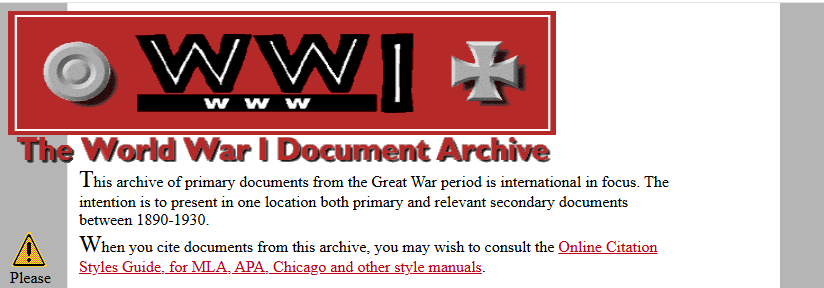
GWPDA, czyli The Great War Primary Documents Archive, to internetowe archiwum historyczne poświęcone przede wszystkim I wojnie światowej. Jego głównym celem jest gromadzenie i bezpłatne udostępnianie dokumentów źródłowych dotyczących Wielkiej Wojny oraz wydarzeń, które doprowadziły do jej wybuchu i ukształtowały sytuację polityczną po jej zakończeniu. Zakres chronologiczny materiałów obejmuje w przybliżeniu lata 1890–1930.

Projekt należy do starszych internetowych archiwów historycznych. Jego początki sięgają połowy lat 90. XX wieku. Archiwum powstało dzięki współpracy historyków, badaczy i wolontariuszy zainteresowanych I wojną światową. Założeniem projektu było zapewnienie bezpłatnego dostępu do dokumentów, które wcześniej można było znaleźć przede wszystkim w bibliotekach i tradycyjnych archiwach.

Najważniejszą częścią GWPDA są źródła pierwotne. Serwis udostępnia teksty traktatów, umów międzynarodowych, deklaracji wojennych, dokumentów dyplomatycznych, przemówień, raportów, korespondencji i innych materiałów powstałych przed I wojną światową, podczas konfliktu oraz bezpośrednio po jego zakończeniu.

Dokumenty można przeglądać chronologicznie. Osobne części serwisu poświęcono okresowi przed 1914 rokiem oraz poszczególnym latom wojny: 1914, 1915, 1916, 1917 i 1918. Dostępny jest również dział obejmujący okres po zakończeniu działań wojennych. Takie uporządkowanie pozwala prześledzić rozwój wydarzeń oraz dotrzeć do dokumentów powstałych w konkretnym roku.

Szczególnie wartościowy jest dział zawierający oficjalne dokumenty uporządkowane według państw. Znajdują się tam materiały dotyczące między innymi Austro-Węgier, Belgii, Francji, Niemiec, Wielkiej Brytanii, Rosji, Rumunii, Serbii, Turcji, Włoch, Japonii i Stanów Zjednoczonych.

W przypadku Niemiec można znaleźć między innymi tekst niemieckiej deklaracji wojny przeciwko Rosji z 1 sierpnia 1914 roku, układ sojuszniczy Niemiec z Turcją, dokumenty dotyczące przemarszu wojsk niemieckich przez Belgię, rezolucję pokojową Reichstagu z 1917 roku oraz dokument dotyczący abdykacji cesarza Wilhelma II.

Serwis zawiera również ważne dokumenty dotyczące Austro-Węgier. Są to między innymi materiały dotyczące sojuszu z Niemcami, Trójprzymierza, ultimatum skierowanego do Serbii w lipcu 1914 roku oraz wypowiedzenia wojny Serbii. Część źródeł została udostępniona zarówno w oryginalnych językach, jak i w tłumaczeniu na język angielski.

GWPDA nie ogranicza się jednak do dokumentów politycznych i dyplomatycznych. W serwisie znajdują się pamiętniki, wspomnienia, relacje uczestników wydarzeń, opracowania historyczne oraz publikacje z epoki. Dostępne są również osobne części dotyczące wojny morskiej i medycyny podczas I wojny światowej.

Wśród materiałów można znaleźć pamiętniki i relacje osób uczestniczących w wydarzeniach wojennych. Przykładem są dzienniki generała Lionela Dunsterville’a z lat 1911–1922, dziennik amerykańskiego pilota Alfreda A. Cunninghama czy publikacje przedstawiające doświadczenia ludzi przebywających podczas wojny w różnych częściach Europy i Bliskiego Wschodu.

Osobną część stanowi WWI Biographical Dictionary, czyli słownik biograficzny dotyczący postaci związanych z I wojną światową. Serwis posiada również WWI Image Archive zawierające materiały ikonograficzne. Dzięki temu GWPDA może służyć nie tylko do poszukiwania dokumentów tekstowych, ale również informacji o konkretnych osobach i materiałów wizualnych związanych z konfliktem.

Bardzo przydatnym materiałem jest opracowanie „Principal Events 1914–1918”. Zostało ono przygotowane przez Historical Section of the Committee of Imperial Defence i wydane w Londynie w 1922 roku. Zawiera chronologiczne zestawienie wydarzeń oraz osobne części dotyczące polityki, operacji wojskowych, działań morskich i lotniczych.

Z punktu widzenia genealogii GWPDA ma przede wszystkim charakter źródła uzupełniającego. Nie jest to baza metrykalna ani wyszukiwarka żołnierzy, w której można oczekiwać odnalezienia każdej osoby uczestniczącej w wojnie. Serwis może natomiast pomóc w poznaniu wydarzeń, jednostek, frontów i realiów historycznych związanych z wojennymi losami przodka.

Może być szczególnie przydatny podczas badania osób służących w armiach państw uczestniczących w I wojnie światowej. Jeżeli wiadomo, że przodek służył na przykład w armii niemieckiej, austro-węgierskiej, rosyjskiej, brytyjskiej czy amerykańskiej, materiały zgromadzone w GWPDA mogą pomóc lepiej zrozumieć sytuację polityczną i wojskową, w której się znalazł.

Dla polskich genealogów jest to interesujące również dlatego, że podczas I wojny światowej ziemie polskie znajdowały się pod panowaniem Niemiec, Austro-Węgier i Rosji. Polacy byli więc wcielani do armii różnych państw i walczyli niejednokrotnie po przeciwnych stronach frontu. Dokumenty dotyczące Niemiec, Austro-Węgier i Rosji mogą pomóc w poznaniu szerszego kontekstu takich rodzinnych historii.

Serwis posiada także materiały dotyczące wydarzeń poprzedzających wybuch wojny, począwszy od 1870 roku. Pozwalają one poznać system europejskich sojuszy, konflikty polityczne i procesy prowadzące do wybuchu wojny w 1914 roku.

GWPDA jest więc przede wszystkim rozbudowaną cyfrową biblioteką źródeł historycznych dotyczących I wojny światowej. Dla genealoga może stanowić kolejny etap badań po odnalezieniu podstawowych informacji o wojennych losach przodka. Pozwala przejść od samego nazwiska, daty i jednostki wojskowej do dokumentów i relacji pokazujących wydarzenia, których dana osoba mogła być uczestnikiem lub świadkiem.

Największą wartością serwisu jest dostęp do oryginalnych tekstów źródłowych. Zamiast ograniczać się do współczesnych opracowań, użytkownik może zapoznać się z traktatami, raportami, przemówieniami, pamiętnikami i innymi materiałami pochodzącymi bezpośrednio z badanego okresu. Z tego względu GWPDA może być wartościowym uzupełnieniem badań genealogicznych nad przodkami, których życie zostało naznaczone wydarzeniami I wojny światowej.

Dodaj komentarz lub opinię

Twój adres e-mail nie zostanie opublikowany.

We use cookies to personalise content and ads, to provide social media features and to analyse our traffic. We also share information about your use of our site with our social media, advertising and analytics partners.
Cookies settings
Accept
Privacy & Cookie policy
Privacy & Cookies policy
Cookie name Active

Privacy Policy

What information do we collect?

We collect information from you when you register on our site or place an order. When ordering or registering on our site, as appropriate, you may be asked to enter your: name, e-mail address or mailing address.

What do we use your information for?

Any of the information we collect from you may be used in one of the following ways: To personalize your experience (your information helps us to better respond to your individual needs) To improve our website (we continually strive to improve our website offerings based on the information and feedback we receive from you) To improve customer service (your information helps us to more effectively respond to your customer service requests and support needs) To process transactions Your information, whether public or private, will not be sold, exchanged, transferred, or given to any other company for any reason whatsoever, without your consent, other than for the express purpose of delivering the purchased product or service requested. To administer a contest, promotion, survey or other site feature To send periodic emails The email address you provide for order processing, will only be used to send you information and updates pertaining to your order.

How do we protect your information?

We implement a variety of security measures to maintain the safety of your personal information when you place an order or enter, submit, or access your personal information. We offer the use of a secure server. All supplied sensitive/credit information is transmitted via Secure Socket Layer (SSL) technology and then encrypted into our Payment gateway providers database only to be accessible by those authorized with special access rights to such systems, and are required to?keep the information confidential. After a transaction, your private information (credit cards, social security numbers, financials, etc.) will not be kept on file for more than 60 days.

Do we use cookies?

Yes (Cookies are small files that a site or its service provider transfers to your computers hard drive through your Web browser (if you allow) that enables the sites or service providers systems to recognize your browser and capture and remember certain information We use cookies to help us remember and process the items in your shopping cart, understand and save your preferences for future visits, keep track of advertisements and compile aggregate data about site traffic and site interaction so that we can offer better site experiences and tools in the future. We may contract with third-party service providers to assist us in better understanding our site visitors. These service providers are not permitted to use the information collected on our behalf except to help us conduct and improve our business. If you prefer, you can choose to have your computer warn you each time a cookie is being sent, or you can choose to turn off all cookies via your browser settings. Like most websites, if you turn your cookies off, some of our services may not function properly. However, you can still place orders by contacting customer service. Google Analytics We use Google Analytics on our sites for anonymous reporting of site usage and for advertising on the site. If you would like to opt-out of Google Analytics monitoring your behaviour on our sites please use this link (https://tools.google.com/dlpage/gaoptout/)

Do we disclose any information to outside parties?

We do not sell, trade, or otherwise transfer to outside parties your personally identifiable information. This does not include trusted third parties who assist us in operating our website, conducting our business, or servicing you, so long as those parties agree to keep this information confidential. We may also release your information when we believe release is appropriate to comply with the law, enforce our site policies, or protect ours or others rights, property, or safety. However, non-personally identifiable visitor information may be provided to other parties for marketing, advertising, or other uses.

Registration

The minimum information we need to register you is your name, email address and a password. We will ask you more questions for different services, including sales promotions. Unless we say otherwise, you have to answer all the registration questions. We may also ask some other, voluntary questions during registration for certain services (for example, professional networks) so we can gain a clearer understanding of who you are. This also allows us to personalise services for you. To assist us in our marketing, in addition to the data that you provide to us if you register, we may also obtain data from trusted third parties to help us understand what you might be interested in. This ‘profiling’ information is produced from a variety of sources, including publicly available data (such as the electoral roll) or from sources such as surveys and polls where you have given your permission for your data to be shared. You can choose not to have such data shared with the Guardian from these sources by logging into your account and changing the settings in the privacy section. After you have registered, and with your permission, we may send you emails we think may interest you. Newsletters may be personalised based on what you have been reading on theguardian.com. At any time you can decide not to receive these emails and will be able to ‘unsubscribe’. Logging in using social networking credentials If you log-in to our sites using a Facebook log-in, you are granting permission to Facebook to share your user details with us. This will include your name, email address, date of birth and location which will then be used to form a Guardian identity. You can also use your picture from Facebook as part of your profile. This will also allow us and Facebook to share your, networks, user ID and any other information you choose to share according to your Facebook account settings. If you remove the Guardian app from your Facebook settings, we will no longer have access to this information. If you log-in to our sites using a Google log-in, you grant permission to Google to share your user details with us. This will include your name, email address, date of birth, sex and location which we will then use to form a Guardian identity. You may use your picture from Google as part of your profile. This also allows us to share your networks, user ID and any other information you choose to share according to your Google account settings. If you remove the Guardian from your Google settings, we will no longer have access to this information. If you log-in to our sites using a twitter log-in, we receive your avatar (the small picture that appears next to your tweets) and twitter username.

Children’s Online Privacy Protection Act Compliance

We are in compliance with the requirements of COPPA (Childrens Online Privacy Protection Act), we do not collect any information from anyone under 13 years of age. Our website, products and services are all directed to people who are at least 13 years old or older.

Updating your personal information

We offer a ‘My details’ page (also known as Dashboard), where you can update your personal information at any time, and change your marketing preferences. You can get to this page from most pages on the site – simply click on the ‘My details’ link at the top of the screen when you are signed in.

Online Privacy Policy Only

This online privacy policy applies only to information collected through our website and not to information collected offline.

Your Consent

By using our site, you consent to our privacy policy.

Changes to our Privacy Policy

If we decide to change our privacy policy, we will post those changes on this page.
Save settings
Cookies settings